
Back to Blog
8 June 2023 · PC Workshop Team
Understanding the Difference Between Memory and Storage in a PC
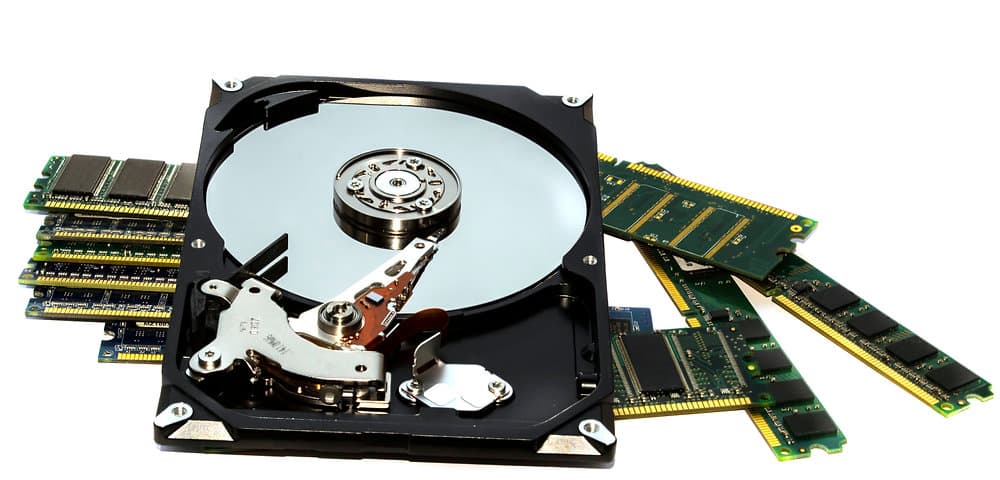
When discussing computers, "memory" and "storage" are frequently used as synonyms, yet they actually represent distinct components serving different functions. Grasping this distinction is crucial for home users making informed decisions about their computing requirements. This article will elucidate the key differences between memory and storage.
Memory (RAM): Random Access Memory functions as temporary workspace where computers store actively-used data during operation. RAM supplies the processor with working space to execute tasks and launch applications. Higher RAM capacity enables simultaneous handling of more data, resulting in enhanced multitasking and performance.
RAM is volatile — its contents disappear when power is removed. Consequently, RAM serves only temporary purposes during active computing sessions, not for maintaining files long-term.
Storage (Hard Drive or SSD): Storage provides permanent data retention space for files, documents, operating systems, applications, and other data requiring preservation after shutdown. Two prevalent storage device types exist: HDDs and SSDs.
Hard Disk Drives employ rotating magnetic disks for data storage and retrieval, offering substantial capacity at relatively modest pricing. However, they demonstrate slower data access and transfer performance.
Solid State Drives utilize flash memory chips, delivering significantly faster performance than HDDs — including quicker boot sequences, speedier application launches, and improved overall responsiveness. While SSDs typically feature smaller capacities and higher per-gigabyte costs, they compensate through superior speed, durability, and efficiency.
Unlike RAM, storage devices preserve information permanently, making them appropriate for long-term retention.
Conclusion: Memory and storage represent distinct PC components fulfilling different roles. RAM provides temporary, rapid access enabling smooth multitasking, while storage delivers permanent capacity for sustained data retention, accessible anytime.
Got a similar problem?
Bring it in — we'll diagnose it and quote before any work begins.